Ignite Global is a leader in hiring, motivating and retaining top talent with management capability employee engagement, productivity and retention candidate.
future of work, The Great Resignation
9600 Great Hills Trail, Suite 150W Austin TX 78759
Ignite Global is a leader in hiring, motivating and retaining top talent with management capability employee engagement, productivity and retention candidate.
future of work, The Great Resignation
9600 Great Hills Trail, Suite 150W Austin TX 78759
Ignite Global is a leader in hiring, motivating and retaining top talent with management capability employee engagement, productivity and retention candidate.
future of work, The Great Resignation
9600 Great Hills Trail, Suite 150W Austin TX 78759
9600 Great Hills Trail, Suite 150W Austin, TX 78759, UNITED STATES
About
In 2009 CEO and founder Kim Seeling Smith started Ignite Global after deciding that instead of being paid to put bums in seats (working as a recruiter for the 15 years prior to that) she wanted to help More
I loved this article about the things companies get wrong when writing job descriptions. I only disagree with their first point. A long job description/job ad isn’t necessarily a bad thing. I’ve helped clients write very lengthy but VERY compelling job descriptions that vividly describes the company culture and values, outlines what the prospective candidate can achieve in the role and what they need to bring to the table (innate abilities and strengths) to be successful.
Read More: https://www.igniteglobal.com/2022/05/7-things-companies-get-wrong-when-writing-job-descriptions/
According to the most recent research by Gallup, 85% of the global workforce is disengaged. That stat that has not moved in well over a decade and COVID has not seemed to impact it at all.
In the US Gallup saw a historic rise in engagement scores shortly after COVID – followed by an equally historic fall.
Yesterday’s post – https://lnkd.in/gHs_rUW provided a calculator to help you figure out how much you were losing in productivity for every member of your team who is disengaged.
I had a comment on that post asking, “Why are they disengaged?”
Talking reimagining talent acquisition with Nate Hewitt of Sapia.ai on their Pink Squirrels Podcast.
We had a very spirited discussion around:
What companies are getting wrong with talent acquisition right now
How companies stand out against their talent competitors (even with little or no budget)
How to think differently about the roles they are filling to access more candidates.
Talking reimagining talent acquisition with Nate Hewitt of Sapia.ai on their Pink Squirrels Podcast. We had a very spirited discussion around: 🔹 What companies are getting...
My Facebook memories told me that 1 year ago today was my first appearance on Nine’s Today Show. Georgie and I had a spirited discussion about the older workforce. I was optimistic back then. I was FINALLY seeing some cracks in our decades old discrimination against older workers.
Not so much anymore. I’ve read recent stories that Ageism is still alive and well and increasing in our new COVID environment.
I’d love your thoughts. What do you see?
If you’re over 50, what do you find? What are your plans for the future? Remain in full time work, do contract work, side hustle? Start your own business?
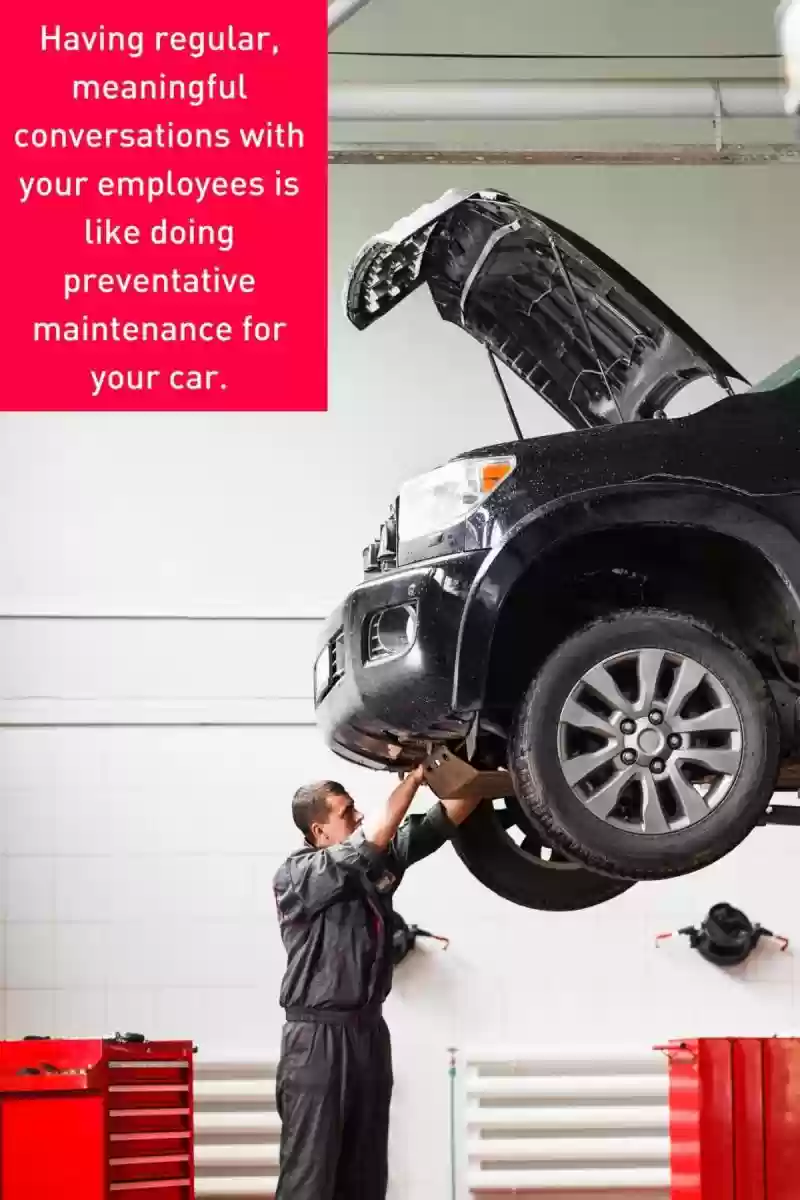
We change the oil and rotate the tires on our car to keep it from breaking. We call this preventative maintenance. And research shows that regular, meaningful conversations do the same thing for our teams.
Yet so many managers complain they don’t have enough time to do this.
How much time would they save by avoiding problems by having proactive conversations to correct performance or behaviour and to find out what their team needs to be fully motivated, engaged and productive?
Are you coming to ATD 2022, the world’s largest talent development conference? You can attend live in Orlando, or beam in virtually. If you’re on site pop by to say hi!
𝗔𝘂𝘁𝗵𝗼𝗿 𝗺𝗲𝗲𝘁 𝗮𝗻𝗱 𝗴𝗿𝗲𝗲𝘁: 9:15 Monday, May 16th, ATD Store
𝗜’𝗺 𝘀𝗽𝗲𝗮𝗸𝗶𝗻𝗴: 8AM Wednesday, May 18th, Room W307 (check for last-minute room switches