
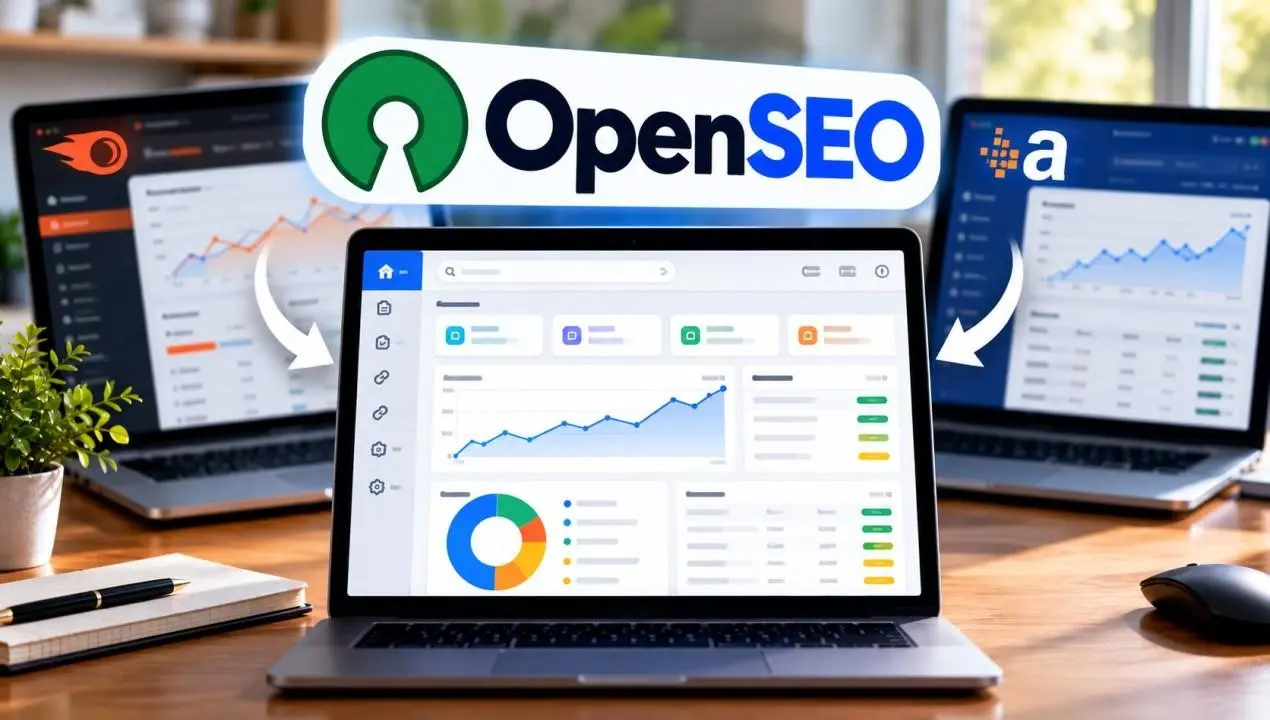
If you've priced SEMrush or Ahrefs lately, you already know where this is going. SEMrush starts at $117 a month billed annually. Ahrefs opens at $130 for a limited feature set - and if you want the full suite, you're at $240 a month.
For a solo operator or small business, that's a real monthly commitment before you've written a single word of content. Someone built an open-source alternative and put it on GitHub.
It's called Open SEO. It does keyword research, competitor analysis, and backlinks - and it connects to Claude directly, which means you can hand the research off to an agent instead of doing it yourself.
Here's how it works, what it actually costs, and what people are using it to build.
The core product that SEMrush and Ahrefs sell is data - not software.
Their value comes from years of crawling the web, tracking keyword rankings, and building databases of what people search for and how sites perform. That infrastructure is expensive, and they pass the cost on monthly.
For agencies running multiple client accounts, the pricing can make sense. For a solopreneur trying to rank a product page or a blog, paying $130 to $240 monthly is a harder argument to make.
The complexity doesn't help either. These tools are built for professional SEOs. They have features most people will never open, and getting real value out of them takes time to learn.
Comparing feature utility across simpler SEO checker and website analyzer tools often shows that smaller teams only need a handful of core metrics to make informed decisions.
A lot of small operators pay the subscription for a few months, use about 10% of the features, and cancel without much to show for it.
Open SEO was built by a solopreneur who wanted to do SEO for his own project. He looked at the existing tools, found them either too expensive or too complex for what he needed, and built something himself.
The project is on GitHub. You can download it, self-host it using Docker and Cloudflare, and run it without paying anything to the creator.
It's a full-stack web application - not a script - with a dashboard, multiple research tools, and an architecture that other developers are already pulling apart and customizing.
At the time of writing, the repo had 66 open pull requests from people adding features they wanted. That's a functioning community, not a project someone published and forgot about.
What Does It Actually Cost?
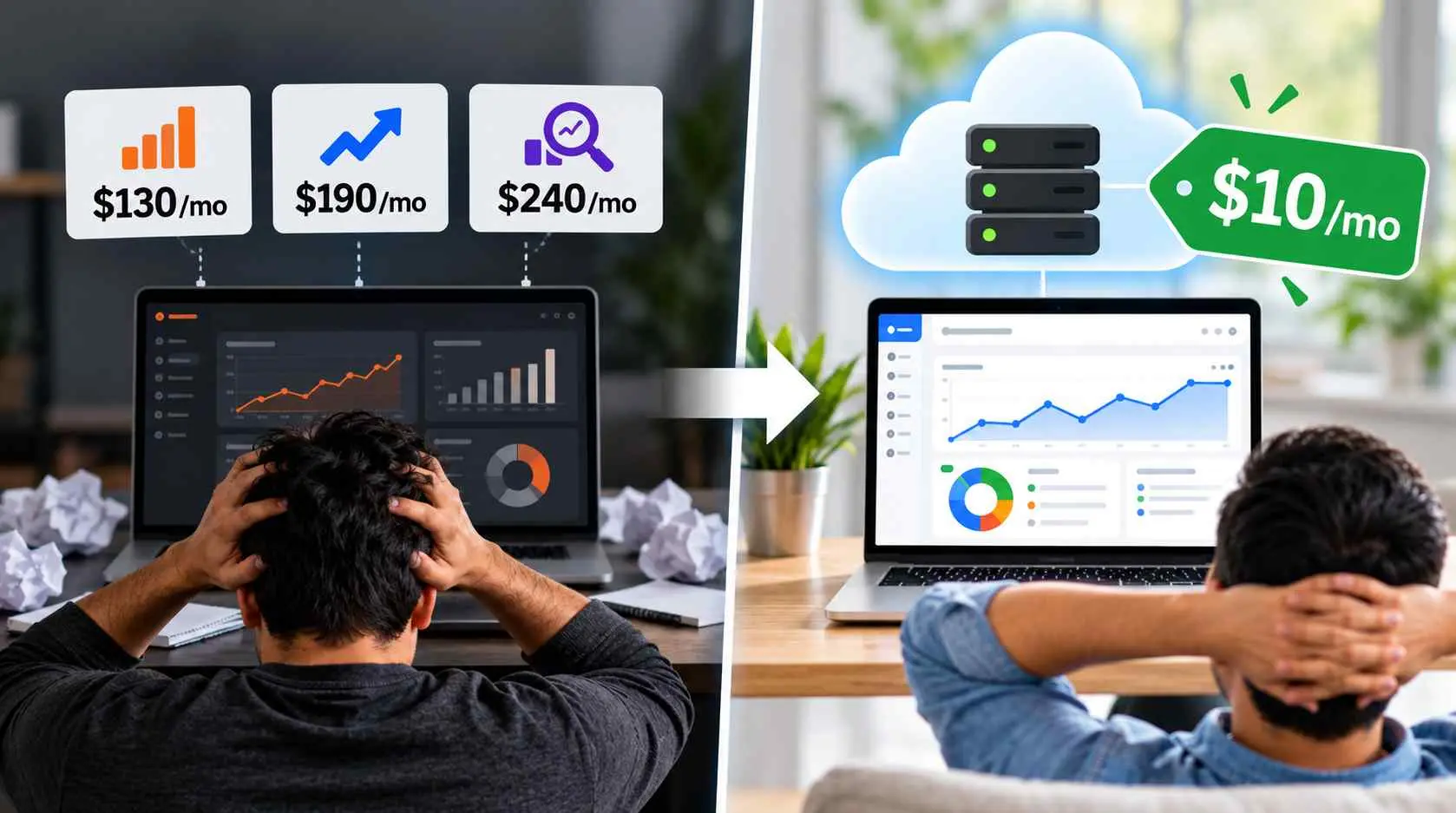
Free to download is not the same as free to run. The data - keyword search volumes, competitor rankings, backlink information - comes from a third-party provider called DataForSEO.
You can buy credits directly from DataForSEO for $50 and pay per query. For a solopreneur doing moderate SEO work, that $50 could last six months. Maybe longer.
If you'd rather not manage credits, the creator also runs a hosted version of Open SEO for $10 a month. That gives you data access and the app without self-hosting.
For most small businesses getting started with SEO, that's a reasonable starting point. Either way, you're paying a fraction of what SEMrush or Ahrefs costs.
The trade-off is that you're giving up some of the data depth and polish that platforms carry. What you get instead is flexibility, a lower monthly number, and a setup that was designed around AI from the start - which neither of those older tools was.
Core Features
Keyword Research
You type in a topic, and it returns actual search volume - how many people search for that phrase each month. That's the basic job, and it matters for one straightforward reason: writing content nobody's searching for gets you nowhere, regardless of quality.
Searching "AI tools for marketing" inside the tool returns 4,400 searches a month. That's a real number from real query data, not a guess.
This is the gap when you ask Claude to do SEO research without a data source behind it. Claude will suggest keywords, but it's working from patterns in its training data, not live search behavior.
It doesn't have access to how many people are actually typing things into Google right now. Open SEO plugs in that missing layer.
When you enter any domain you can see which keywords the domain ranks for which pages bring the traffic and how the domain’s overall content strategy is built.
From there, the moves are fairly obvious. You find a competitor's top page on a topic you cover, figure out why it ranks, and write something better. Or you notice they're getting traffic from a tool or company you hadn't considered, and you reach out to that company about a partnership or sponsored content.
Backlinks are links from other websites pointing to yours. Google uses them as a rough signal of credibility - if reputable sites link to your content, your content is probably worth surfacing.
Understanding how to build a strong backlink profile is critical here, because search engines prioritize relevant, high-authority references over raw link volume.
Open SEO lets you see where your competitors are getting their backlinks. One practical use: find sites linking to abandoned or dead projects in your niche.
Reach out, tell them the link is broken, and offer your site as a replacement. It's a legitimate strategy that used to take hours of manual digging. With a Claude agent working through the list, the labor drops significantly.
The AI-Native Setup

SEMrush and Ahrefs were built before anyone was routing work through a language model. They're dashboard tools - you log in, click around, pull reports, and draw your own conclusions. That model still works, but it's not how a lot of people want to work anymore.
Open SEO connects to Claude through an MCP integration. Open a chat window and ask the system to research your site’s SEO and the system will use Open SEO’s tools to pull data and give you solid answers. You do not need to touch the dashboard.
The creator himself mostly skips the dashboard. He works through Claude almost entirely, only visiting the actual app when a customer flags a bug.
He also demonstrated something worth noting: he wrote a prompt telling Claude to audit his website's SEO, do keyword research, and build comparison landing pages for SEMrush, Ahrefs, and Ubersuggest as alternatives.
He ran it overnight and came back to finish draft pages in the morning. Those pages were based on what was actually ranking for those search terms - not what Claude assumed people might want to read.

Because the codebase is open, people are using it as a base for tools that have nothing to do with a standard SEO dashboard.
One user - a professional SEO - built a content optimization layer into his local version. It analyzes articles for keyword density and helps him decide whether a page is likely to rank for what he's targeting.
The creator said that feature is too advanced for the main product, where the goal is to avoid overwhelming people new to SEO.
Another user built an outreach CRM inside Open SEO. It finds contact emails for website owners, stores them, tracks outreach status, and flags follow-ups. The workflow that used to live across spreadsheets, email tools, and manual notes now runs from one place.
A third group built Google Analytics integrations - enough people, in fact, that the creator eventually made it a native feature. Five months passed between when people first started asking for it and when it shipped.
By that point, dozens of people had already built their own version.
The creator uses Open SEO to promote Open SEO. His strategy was to own the "open source SEO" search category rather than go after high-volume terms where Ahrefs and SEMrush already dominate. That worked.
After a Product Hunt launch and steady content production, organic search from Google became the site's biggest traffic channel.
He also made a mistake that's useful to understand. Open SEO started ranking for "backlink checker" - a high-volume term. It got 200,000 impressions in a week, but only 100 clicks.
Impressions with no clicks usually mean the result is showing but the page isn't what searchers are looking for. He tried to improve the click-through rate by rewriting the page to call itself a "free backlink checker."
Google promptly stopped showing the page for that term. The internet already has hundreds of free backlink checkers. Once his page looked like one of them, it had nothing to separate it from the rest.
The rankings haven't recovered. It's a real example of how SEO decisions carry actual consequences, and not every optimization move goes the direction you intended.
If you're paying $130 or more a month for an SEO tool and genuinely using it, stick with it. If you're paying and mostly not using it - or if you're using Claude for content work and want keyword data behind it - Open SEO is a reasonable place to start.
The GitHub repo is public. The hosted version is $10 a month. The self-hosted version costs DataForSEO credits. For most solo operators, those numbers are a lot easier to defend than the alternative.