

It is not an uncommon behavior of a website owner: to publish a page, then wait, and watch that nothing happens. That page ends up weeks later, just sitting in the Search Console as not indexed, not even when the site has 30, 40, 50 articles.
A lot of people took a shot at optimising their indexing with little – or no – understanding of why particular pages are not being indexed by Google. A new website, weak discovery signals, low-value content, mass-generated AI articles, and technical issues can all contribute.
The video groups the problem into four areas: a new website with limited trust, large amounts of weak content, poor-quality or mass-generated AI content, and technical indexing problems. Also references Google's Search Quality Evaluator Guidelines September 11, 2025
Not every page is indexed by Google, as merely existing means nothing. Is your website up to scratch in terms of quality and trust? Is Google able to find your pages or are you suffering from some technical issue that is blocking the crawl silently?
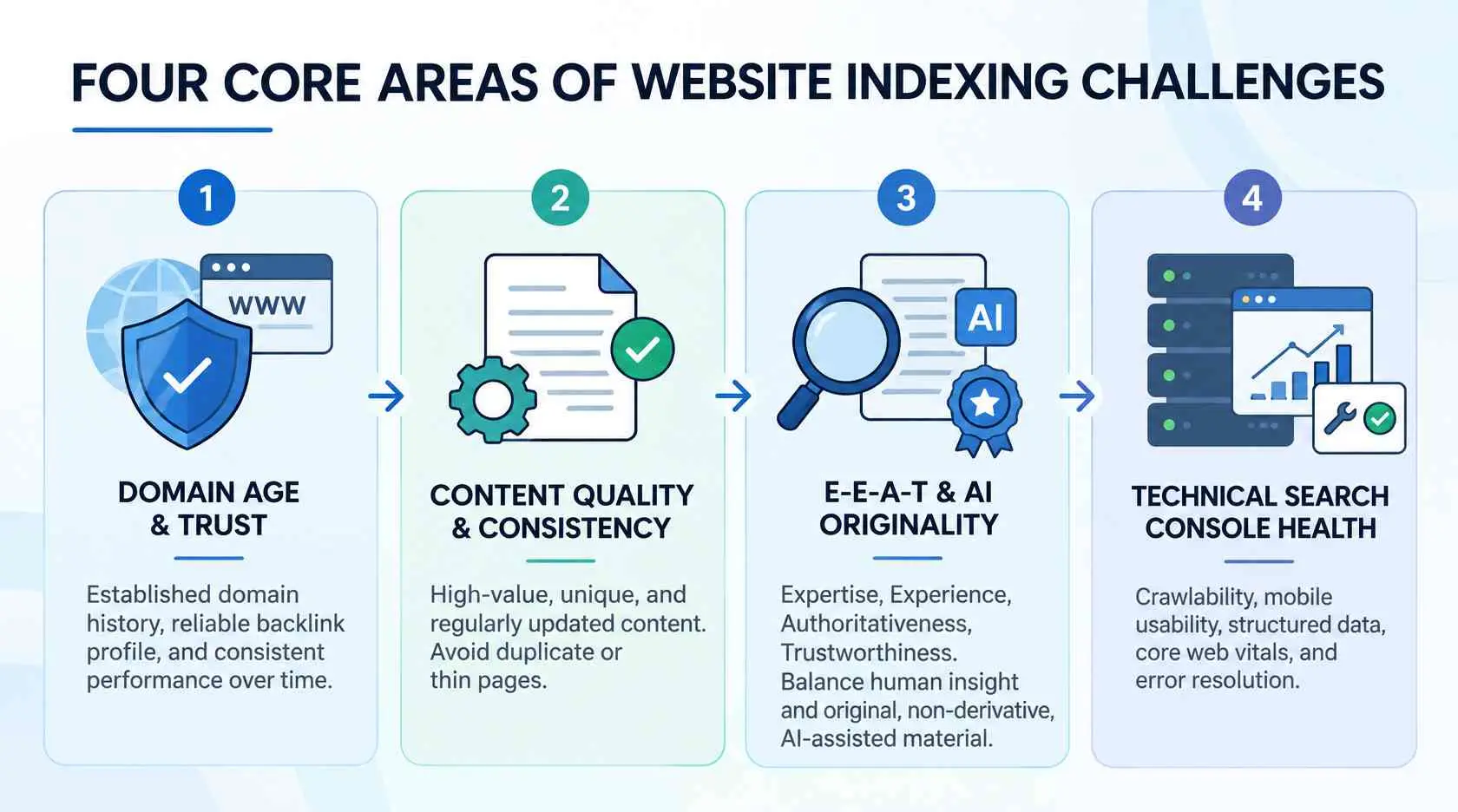
A new website can struggle with indexing because it has very little history or trust.
The video talks about this using quality control and spam prevention. Spammers can make websites that seem real. They get these pages indexed by search engines.
Later they switch the content to something illegal or just not good quality. Movie download and APK websites are mentioned as examples.
The video also discusses abuse of Google's Instant Indexing API, where people submitted content that did not follow Google's guidelines.
A new site may have few signals showing that it is established and useful, such as reputable backlinks, social mentions, and consistent quality content. Crawl resources matter too because Google processes an enormous amount of web content.
Start with Google Search Console & Bing Webmaster Tools. Site Validation & XML Sitemap. Sitemap - not required, but will provide a list of URLs for search engines.
Next, publish consistently. Do not upload 30 or 50 posts in one day. Make a schedule: two or three posts per week, but publish consistently.
Internal linking is also important. Link new pages from your homepage and from pages that Google has already discovered or indexed. Those existing pages can provide a path for search engines to find newer content.
You can also create discovery signals outside your website. Put your link to your site in profiles on Facebook, Reddit, Quora or LinkedIn. With these links being no-followed, they won’t weigh to the link equity, but they can still help evaluate the site and be indexed by search engines.
Understanding sound optimization principles and avoiding SEO strategies that you might be doing wrong ensures you do not waste early crawl equity on low-impact tactics.
Give the website time. A site that is only one or two weeks old should not behave like an established domain.
A new blogger thinks:- If a certain amount of articles are published, their pages will be indexed by Google, or they will become AdSense-approved.
It does not work that way.
The video recommends fewer, more useful articles and regular publishing. One or two strong posts per week can be more sensible than chasing “I need 50 articles.”
Publishing dozens of articles and then disappearing can create a weak site rather than a strong one.
Publishing quickly can hurt quality. Beginners often create articles in bulk, make only minor changes, and stop after reaching their target.
The video connects this with E-E-A-T: experience, expertise, authoritativeness, and trustworthiness. More URLs do not automatically make a site more authoritative.
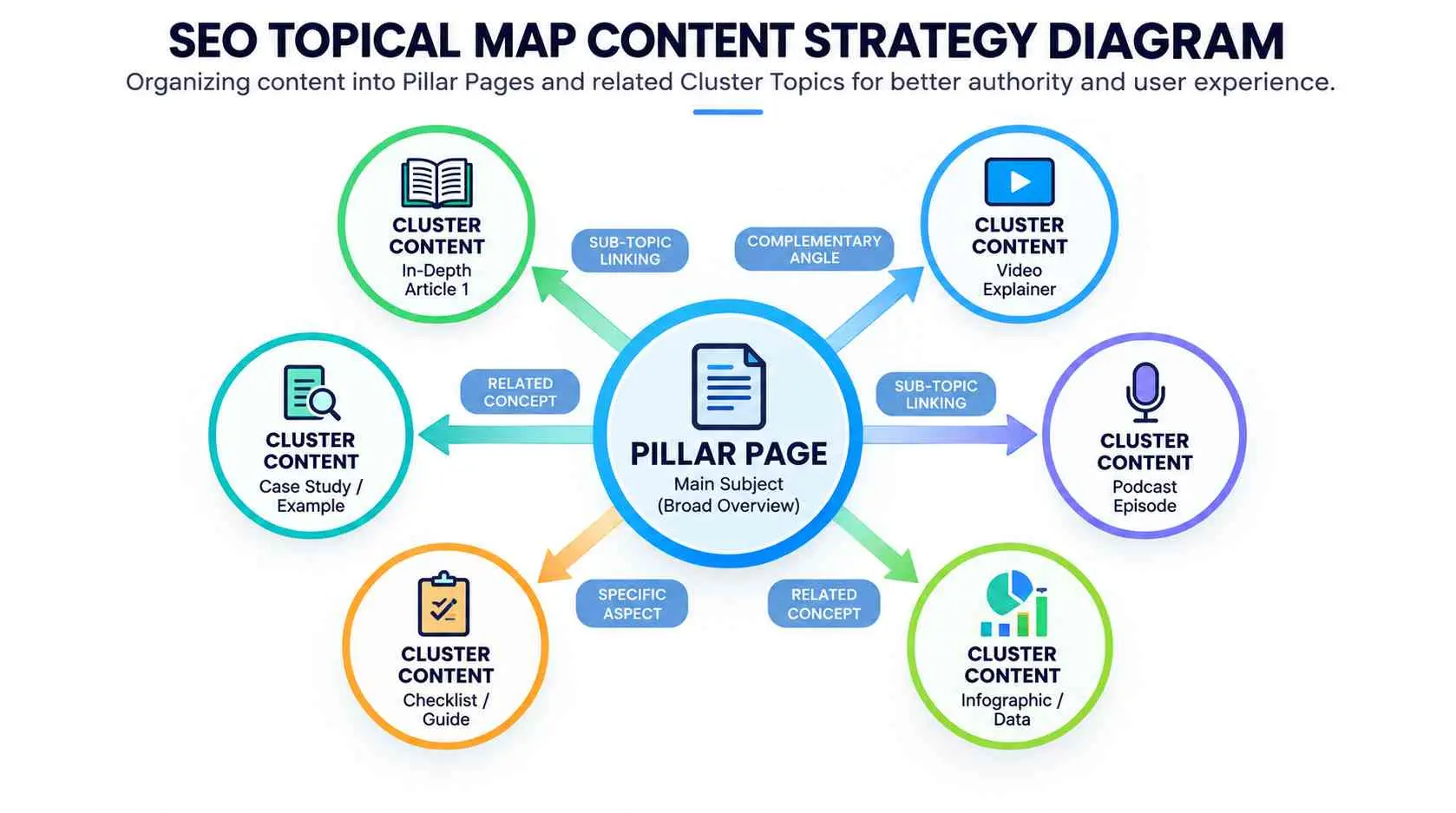
A better approach is to build a topical map. Create several pillar pages and related cluster content around each one. This creates a connected information structure instead of random posts.
The issue is not simply AI use. The concern is whether a website is producing large amounts of content with little effort, originality, or useful information.
The video refers to scaled content abuse in the Search Quality Evaluator Guidelines. The basic problem is creating many pages mainly to benefit the site owner while providing little additional value to users.
Generative AI makes this easy. A publisher can create dozens of articles quickly, make minor edits, and publish them in bulk.
But producing content quickly does not automatically make it useful. If AI simply rewrites information already available across the web and produces it at scale, the site may give Google little reason to prioritize those pages.
The video above describes low-value content as unoriginal, shallow, inaccurate, minimally edited, or produced at scale without meaningful human effort.
Long content can still be low value. Word count alone does not make it useful. The transcript also discusses finance, health, parenting, and crypto content. These subjects require extra care because poor advice can have serious consequences.
Another common tactic is to take AI-generated content and run it through a humanizer. It argues that changing wording or adding a few personal phrases does not automatically make content high quality.
Grammar and tone are only part of content quality. A rewriting tool cannot automatically add genuine experience. It cannot test a product, try a recipe, interview someone, conduct original research, or provide first-hand observations.
The video also warns against copying another article, translating it, changing the wording, and calling it original. Small wording changes do not create genuinely new information.
The same applies to the idea of making an article “50% AI and 50% human.” The percentage of AI used is not the real quality test. What matters is the page's value.
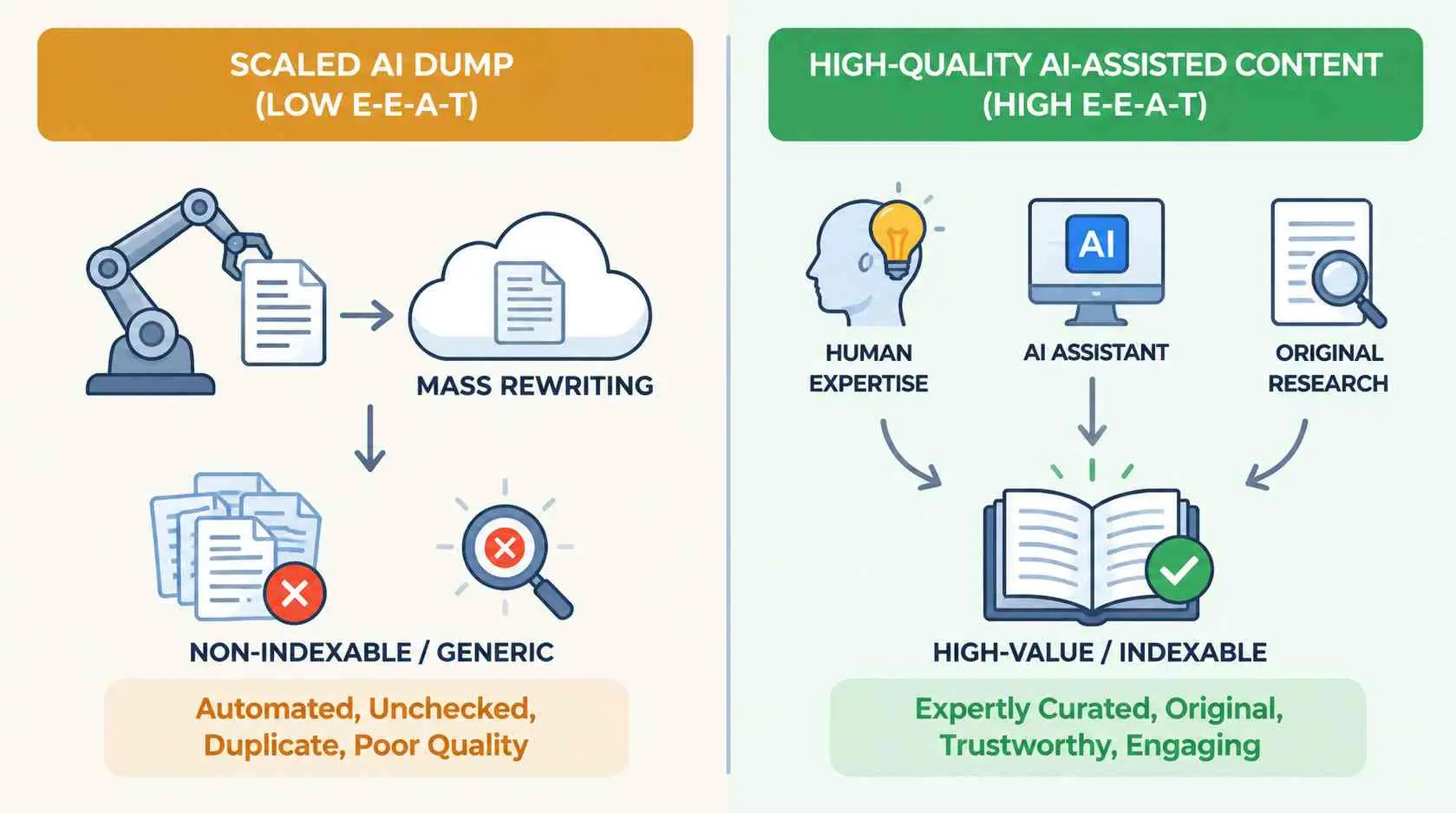
Figure 3: Workflow Comparison: Scaled AI Dump vs. AI-Assisted Original Research & High E-E-A-T Content
The video's central recommendation is to focus on usefulness instead of content volume.
Each article should serve a specific purpose. A way to improve by focusing on visitors to the page and the problem the page is solving.
Is it to inform, educate, explain, review or help them decide? If only AdSense approval or quick money is the goal, the approach will surely be low-quality.
Utilise first-hand knowledge where you have it (for real). Add original observations, examples, testing, research, comparisons, and practical explanations.
Show readers why the author or website is qualified to discuss the subject. For areas such as finance or health, this matters even more.
The main content should be organized, accurate, relevant, and clearly written. Research should support your own contribution rather than rewrite what everyone else has published.
The video gives its own research process as an example: brainstorming, reviewing official documents, using AI for grammar and presentation, and adding personal industry experience.
The key distinction is using AI as an assistant, not a replacement for research and thinking.
Even useful content can fail to appear in Google because of technical problems.
Google Search Console can show a large number of “Not indexed” URLs. That total can be misleading because it may include URLs you never intended to index, including 404 pages and other unwanted URLs.
The video recommends opening Page Indexing and focusing on submitted pages. These are the URLs you have actually submitted through your sitemap or other methods.
Check why the submitted pages are not indexed. Search Console can show issues such as no-index directives, server errors, alternate pages, 4xx problems, and other indexing states.
Some are normal. Others need fixing. Do not panic because the “Not indexed” number is high. First determine whether those URLs are supposed to be indexed.
The video warns against repeatedly using “Validate Fix” without understanding the issue. Fix the problem first, then use validation. Use reputable SEO checker and website analyzer tools can help identify hidden crawl barriers and code errors before you validate.
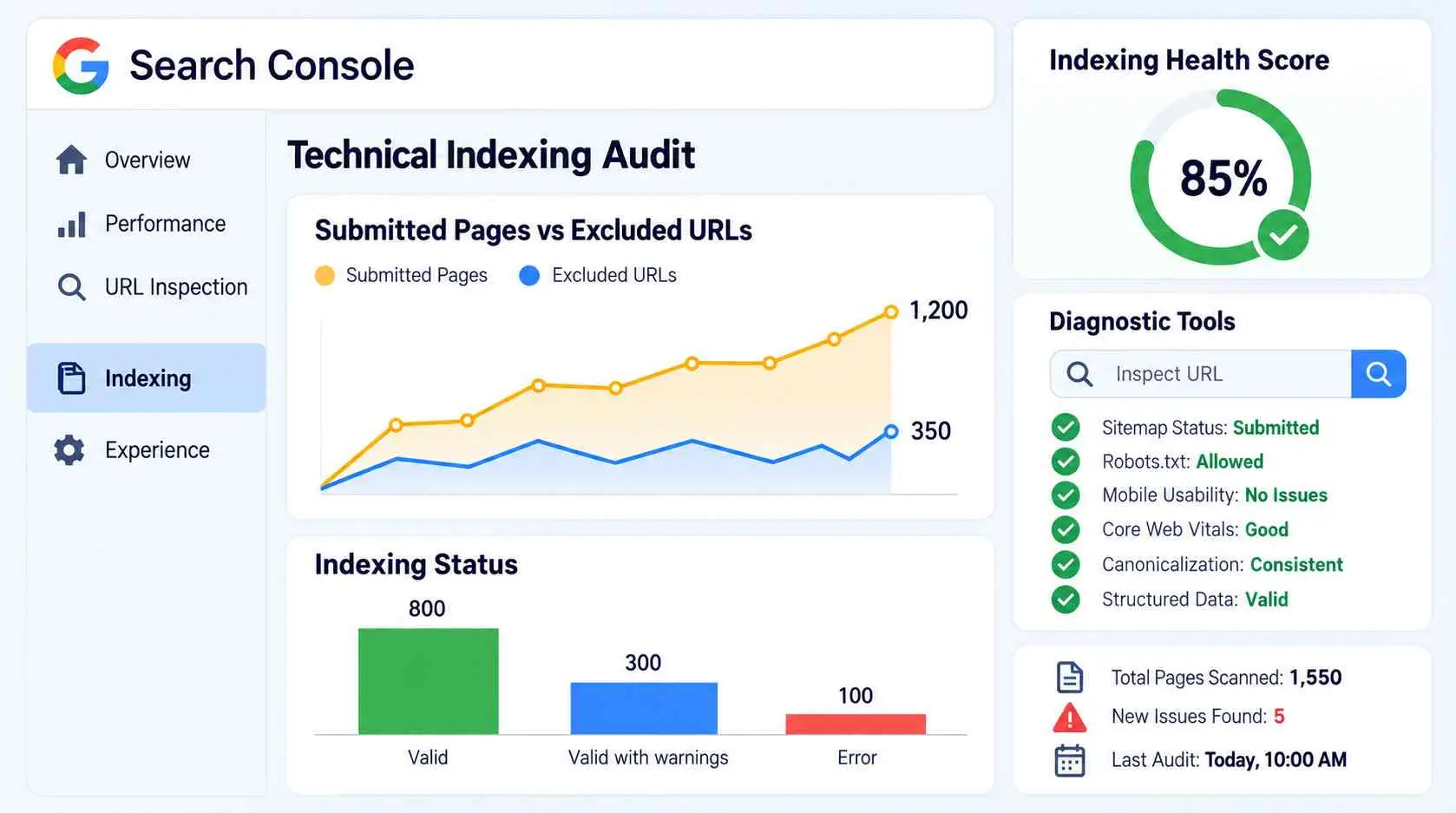
Figure 4: Google Search Console Page Indexing Audit & Diagnostic Focus Workflow
Getting a website indexed is not about finding one secret button or publishing a fixed number of articles.
A new website needs time to build trust and discovery signals. Content needs to be useful rather than mass-produced. AI can help with research, grammar, organization, and presentation, but generating and humanizing large numbers of articles is not a substitute for original work.
Technical SEO matters too.Check on Google Search Console if the relevant URLs are discovered and why some are excluded.
The lesson is simple. Stop chasing the number of published posts. Build a website that gives Google a reason to crawl, understand and rank your pages.