Ignite Global is a leader in hiring, motivating and retaining top talent with management capability employee engagement, productivity and retention candidate.
future of work, The Great Resignation
9600 Great Hills Trail, Suite 150W Austin TX 78759
Ignite Global is a leader in hiring, motivating and retaining top talent with management capability employee engagement, productivity and retention candidate.
future of work, The Great Resignation
9600 Great Hills Trail, Suite 150W Austin TX 78759
Ignite Global is a leader in hiring, motivating and retaining top talent with management capability employee engagement, productivity and retention candidate.
future of work, The Great Resignation
9600 Great Hills Trail, Suite 150W Austin TX 78759
As I mentioned in yesterday’s post, I am currently fielding 2 questions from clients in Australia and the US about the skills shortage.
The first…
Now that the borders are open in Australia how long will it be before our skills shortage abates?”
I answered this yesterday.
I’ll address the second question today.
The upcoming US recession will surely help the skills shortage (and put realign candidates’ expectations), right?”
To answer this we need to go back in time. You’ve undoubtedly heard the term “The War for Talent” but do you know where that came from? It was a report from McKinsey & Company about the upcoming global skills shortage – written in 1997!!!
So the skills shortage is a challenge that we’ve seen coming for a very very long time. Korn Ferry (by memory but it may have been Manpower, don’t quote me on the source but the numbers are accurate) wrote in 2014(ish) that by 2025 we were expecting a global skills shortage of up to 85 million people (and 20 million won’t have the right skills to be employed as technology changes the shape of our roles.
So, if the US (and/or the rest of the world) goes into recession will the skills shortage go away? Maybe – in certain industries – for a period of time.
But this is part of a larger, global trend that is due to declining birth rates, the declining workforce participation rates (in some countries) and the reshaping of roles due to technology, as I mentioned above.
9600 Great Hills Trail, Suite 150W Austin, TX 78759, UNITED STATES
About
In 2009 CEO and founder Kim Seeling Smith started Ignite Global after deciding that instead of being paid to put bums in seats (working as a recruiter for the 15 years prior to that) she wanted to help More
We change the oil and rotate the tires on our car to keep it from breaking. We call this preventative maintenance. And research shows that regular, meaningful conversations do the same thing for our teams.
Yet so many managers complain they don’t have enough time to do this.
How much time would they save by avoiding problems by having proactive conversations to correct performance or behaviour and to find out what their team needs to be fully motivated, engaged and productive?
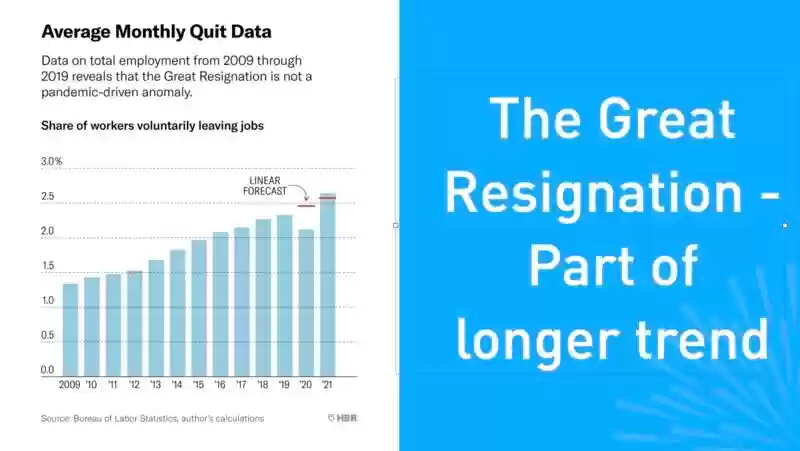
If you think #thegreatresignation is related to Covid or the current skills shortage, think again. This graph from the Bureau of Labor Statistics clearly shows that, with the exception of 2020, people have been changing jobs in increasing numbers since 2009. While this is a US stat, I believe the trend is definitely global.
I’ve often said that Covid accelerated other workforce trends that had been building for years. I think what we see with this graph is the result of...
I had a great time speaking to Ben O’Shea on The West Australian‘s The West Live show about what really drives people to change jobs.
Like in all booms, companies within WA are losing great people for the allure of a high pay packet working in a FIFO environment. Can leaders do anything to stop this from happening (spoiler alert – yes!).
Why do people look for other roles (spoiler alert – despite what most leaders think, it’s rarely about money)?
What do you do if you lose someone that you don’t want to lose? Can you entice them back (spoiler alert – statistically, yes, 20% of the time).
According to the most recent research by Gallup, 85% of the global workforce is disengaged. That stat that has not moved in well over a decade and COVID has not seemed to impact it at all.
In the US Gallup saw a historic rise in engagement scores shortly after COVID – followed by an equally historic fall.
Yesterday’s post – https://lnkd.in/gHs_rUW provided a calculator to help you figure out how much you were losing in productivity for every member of your team who is disengaged.
I had a comment on that post asking, “Why are they disengaged?”
𝗧𝗮𝗸𝗲 𝗺𝘆 𝗺𝗼𝗻𝗲𝘆 – 𝗽𝗹𝗲𝗮𝘀𝗲! It’s the end of the Australian Financial year and I often get the question, “𝗜𝗳 𝗜 𝗽𝗮𝘆 𝗯𝗲𝗳𝗼𝗿𝗲 𝘁𝗵𝗲 𝗲𝗻𝗱 𝗼𝗳 𝘁𝗵𝗲 𝘆𝗲𝗮𝗿 𝘄𝗼𝘂𝗹𝗱 𝘄𝗲 𝗯𝗲 𝗮𝗯𝗹𝗲 𝘁𝗼 𝗱𝗼 𝘁𝗵𝗲 𝘄𝗼𝗿𝗸 𝗻𝗲𝘅𝘁 𝘆𝗲𝗮𝗿?”
To which I, of course, reply with a resounding yes!
If you think #thegreatresignation is related to Covid or the current skills shortage, think again. This graph from the Bureau of Labor Statistics clearly shows that, with the exception of 2020, people have been changing jobs in increasing numbers since 2009. While this is a US stat, I believe the trend is definitely global.
I’ve often said that Covid accelerated other workforce trends that had been building for years. I think what we see with this graph is the result of...