AI subscriptions are quietly draining your budget. $20 for chat, $99 for voice, $360 for a song generator you use twice a month. It compounds.
And the annoying part isn’t just the cost - it’s the caps, the bots refusing refunds, and the feeling that you’re renting something that could change its terms on you tomorrow.
For almost every major paid AI tool right now, someone has built a free open-source version you can run on your own machine.
ElevenLabs is great until you realize every retry burns credits. Cancel your plan, and those unused credits vanish.
Voice Studio was knocked together in 10 days by a startup CTO in India. It copies a voice from a short audio clip, reads any script in that voice, and dubs videos into other languages. No credit counter - redo a line 50 times, it costs nothing.
One real catch: the default Omnivoice model is non-commercial only. Paid work means switching models or paying their $99/month pro license.
PewDiePie, the YouTuber with 100+ million subscribers, got uncomfortable watching ChatGPT quietly build a memory of everything personal he’d shared. So he built a local alternative.
With Adysius You get chat, deep research, memory, agents, and a built-in email assistant - all running on your computer. It’s not as capable as ChatGPT.
The AI is only as strong as what fits on your hardware. But if you’ve hit usage limits one too many times, or you just don’t love your conversations living on someone else’s servers, it’s worth a look.
A Microsoft product designer in Ireland noticed that dozens of AI companies hand out small daily free quotas to attract users. He wired them all together.
His app lets a coding agent jump from one free model to the next the moment a limit hits - effectively giving you near-endless free coding.
No frontier models like Claude or GPT-4. You’re working with providers trying to win market share. For daily coding, that’s fine. A one-time $19/year add-on unlocks limited-time free models before they hit the public repo.
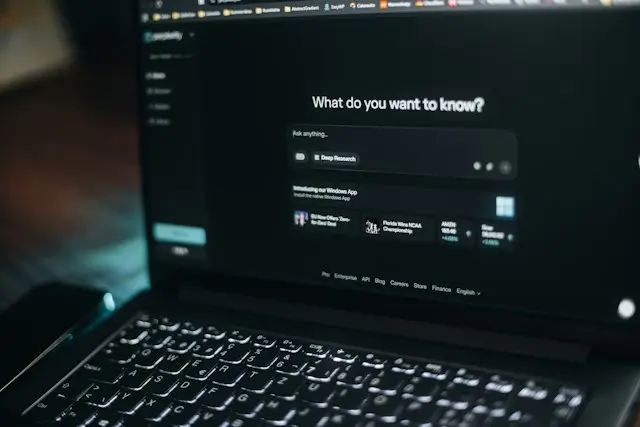
Vane has same idea as Perplexity: ask a question, it searches the web, writes an answer with numbered citations. You run it yourself on a local Ollama model or a free Gemini key.
It’s rougher around the edges than Perplexity. But it’s private, free, and you can point it at Claude or OpenAI keys if you want better answers.
InvokeAI Started by a cancer researcher in 2022, grew into a funded startup, then went fully open-source after its founders moved to Adobe. Now volunteers maintain it.
Invoke is a full image studio - layered canvas, inpainting, background swaps, short video clips from still images. No monthly plan. Your images never leave your machine. You do need a real GPU or an Apple Silicon Mac. Standard laptops will crawl.
Musicians and AI researchers built this after watching Suno change its commercial terms overnight. ACEP makes full songs with vocals from a text prompt, running entirely on your hardware.
Honest comparison: Suno is at version 6. ACEP is closer to version 4 quality. But it’s unlimited and commercially yours - no waking up one morning to find the rules changed.
Drop in a YouTube link or a video file, and Open Shorts clips the best 3–15 moments into vertical short-form clips with auto-captions. Built by a small Spanish team last December. Works on a free Gemini key or a local model.
Free on their website with a watermark. Self-host to remove it. Needs 8GB RAM and Docker. Without a GPU, expect 5–8 minutes per clip.
Lovable burns credits fast, and once you’re in their ecosystem, switching is a pain. An ex-Google engineer got annoyed enough to build Dyad - a plain-English app builder that runs locally, uses free Gemini models, and deploys to Vercel or Cloudflare’s free tiers.
No credit counter. No lock-in. Bring whatever AI model you want.
When OpenManus launched invite-only and people started reselling access, researchers cloned it quickly. Open Manus does the full agent loop: type a goal, it plans steps, browses sites, writes code, saves files.
You’ll need an API key for the AI model, which can get expensive. Pair it with Free LLM API and that cost disappears.
Topaz stopped selling outright and switched to subscriptions. Upscayl does the same job - AI upscaling up to 4x, or 16x if you run it twice - for free, locally, with no usage limits.
Drag in an old folder of photos from your first smartphone and let it run overnight. Needs a Vulkan-compatible GPU or Apple Silicon. Face repair requires their $25/month cloud version; everything else is yours.
None of these are drop-in replacements. Some need good hardware. Some are slower. A few are rough.
But across voice, chat, coding, search, images, music, video, app building, agents, and photo work - the free versions exist, they run on your machine, and nobody can change the terms on you tomorrow.