
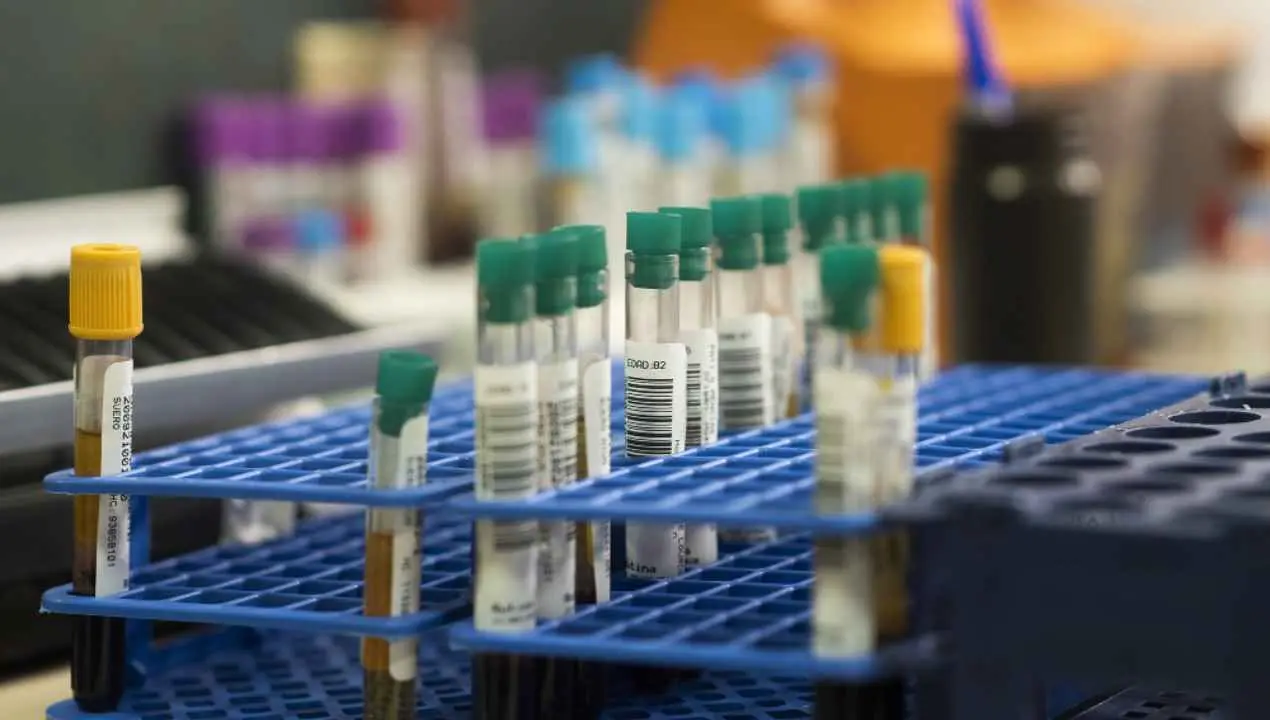
Treatments like IVIG infusions, clotting factor shots for hemophilia patients, and albumin drips used in ICUs all start at plasma donation centers - the same kind you've probably driven past without giving it a second thought.
The United States collects more plasma than any other country by a wide margin, and a small group of companies controls most of that supply chain.
This list covers the ten names that actually matter in the U.S. plasma industry for 2026 - the ones donors run into when comparing pay rates and the ones that come up when researching who really controls the country's plasma supply.
Not all ten are “fractionators” in the strict sense, and that distinction gets glossed over in a lot of articles on this topic. It's kept clear here instead.
Plasma fractionation is the process of splitting whole plasma into its individual proteins - albumin, immunoglobulins, clotting factors, and a few specialty proteins most people have never heard of unless they or someone they love needed them.
Here's the part that trips people up: not every big plasma company actually fractionates anything. Some just collect it and ship it off to companies that do. A couple are nonprofits running blood banks, not pharmaceutical manufacturers.
Lumping them all together under "top plasma companies" is technically fine for a listicle, but it hides what's actually going on. So I've kept the distinctions visible below instead of pretending everyone on this list does the same job.
No secret formula here. :
How many active U.S. collection centers a company runs
Whether it owns fractionation/manufacturing capacity or just sells plasma upstream to someone who does
FDA licensing history and manufacturing track record
What donating there is actually like - pay, scheduling, wait times
How long the company's been operating in the U.S. and how visible it is in the space
Some of these are genuine pharmaceutical giants. A couple are nonprofits with a completely different mission. A few are small regional collectors that most people outside the industry have never heard of. All ten earn their spot.
Company | Type | Parent Organization | Notable Focus |
|---|---|---|---|
CSL Plasma | Fractionator | CSL Behring | Full vertical integration |
Grifols | Fractionator | Grifols S.A. | Immunoglobulin therapies |
Octapharma Plasma | Fractionator | Octapharma AG | Fast center expansion |
KEDPLASMA | Fractionator | Kedrion Biopharma | Regional growth (Midwest/South) |
BioLife Plasma Services | Fractionator | Takeda | Rare disease therapies |
Vitalant | Nonprofit | Independent | Blood banking + plasma |
Biological Specialty Company | Specialty collector | Independent | Research/diagnostic plasma |
B Positive Plasma | Independent collector | Independent | Regional centers |
ABO Plasma | Independent collector | Independent | Regional centers |
American Red Cross | Nonprofit | Independent | Humanitarian collection |
CSL Plasma is not a standalone fractionation manufacturer in the narrow sense. It is the collection arm connected to CSL Behring, which uses plasma collected at CSL Plasma facilities to manufacture plasma-derived medicines.
CSL says its plasma network has close to 350 collection centers in the U.S. and Europe, with collected plasma going to CSL Behring for therapies distributed to more than 100 countries. CSL Behring describes plasma fractionation as one of its main scientific platforms.
That connection between collection and manufacturing is the important part here.
Worth Knowing: CSL is one of the clearest examples on this list of a vertically integrated plasma business.
Grifols is one of the companies on this list that directly fits the "plasma fractionation" description. Its U.S. operations include a large donor-center network as well as fractionation and purification facilities in Clayton, North Carolina, and Los Angeles.
Grifols says those two U.S. manufacturing plants represent about 65% of its global fractionation and purification capacity.
The company has also continued investing in plasma collection and fractionation capacity internationally. In June 2026, Grifols announced a new fractionation facility in Spain expected to add three million liters of annual capacity when it begins operations.
Worth Knowing: Grifols has one of the most complete end-to-end plasma operations serving the U.S. market.
Octapharma Plasma runs a plasma collection network in the United States. The parent company, Octapharma takes plasma to make therapies.
Octapharma says most of the plasma it uses comes from company-owned donation centers. It currently operates more than 180 U.S. donation centers, while its manufacturing sites are in Europe rather than at the donation centers themselves.
The company's production process includes fractionating plasma to isolate therapeutic proteins and applying additional steps to remove or inactivate potential infectious agents.
Worth Knowing: The U.S. business is heavily focused on collection, feeding a larger international manufacturing operation.
KEDPLASMA is a part of Kedrion Biopharma. KEDPLASMA works to collect high‑quality source plasma. The company says the plasma given at its centers is used to make medicinal products for severe and rare diseases.
KEDPLASMA currently lists than 70 donation centers in the United States. This is another example where a collection center's only one part of a larger plasma‑derived medicine chain.
Worth Knowing: KEDPLASMA is mainly a source‑plasma collection organization. KEDPLASMA is not a U.S. fractionation company.
Vitalant is better known as a blood services organization. Vitalant is not primarily a plasma fractionator. It runs donation centers across the United States.
Vitalant supplies blood products and specialized services to hospitals, and its current site says it serves about 900 hospitals and has 115 donation centers nationwide.
Vitalant does collect plasma, but its responsibilities are more than that, including whole blood, platelets, plasma, and other blood transfusion services.
Worth Knowing: Vitalant is part of the plasma and blood supply chain, but it should not be called a regular plasma fractionation manufacturer.
Biological Specialty Company, or BSC, works in a different part of the market. The company says it supplies the scientific community with human biological materials collected through its own regulated and IRB-approved donor centers.
Its products include plasma, blood, serum, white blood cells, and other samples. Some of BSCs U.S. Centers offer plasmapheresis. It’s business focuses on biological materials rather than making plasma‑derived medicines.
Worth Knowing: BSC is more relevant to research and biological-sample supply than pharmaceutical fractionation.
BioLife is part of Takeda, and the plasma donated at its centers is used by Takeda to make plasma-derived medicines. The company currently lists 238 U.S. donation centers, making it one of the larger collection networks in the country.
BioLife also says its collected plasma supports more than 20 types of medicines for people with various rare conditions. The U.S. BioLife operation is therefore mainly the collection side of Takeda's larger plasma-derived therapy business.
Worth Knowing: BioLife is a major source-plasma collection network connected directly to a global pharmaceutical company.
B Positive Plasma focuses on source plasma collection through its U.S. donation centers. The company says it operates as a plasma collection company and collects plasma used in the manufacture of plasma-derived therapies.
It also explains the difference between plasma collection and later fractionation, where plasma proteins are separated and purified for medicines. That makes B Positive useful to include in a supply chain comparison but not as a company running a large fractionation manufacturing network itself.
Worth Knowing: B Positive is primarily on the collection side of the industry.
ABO Plasma was incorporated in 2020 with a specific focus on collecting medical-grade source plasma for biotherapeutic pharmaceutical clients.
The company says its collected plasma is used in the production of plasma protein-based injectable therapies. Its current network includes centers in states such as Texas, California, Utah, New Jersey, and others, with additional locations being developed.
Again, the distinction matters. ABO Plasma collects the raw material used further down the production chain.
Worth Knowing: ABO Plasma is a source-plasma collector serving pharmaceutical customers.
The American Red Cross is another organization that does not fit neatly into the plasma fractionator category. The American Red Cross blood services collect blood, platelets, and plasma and supply blood products to hospitals.
It offers AB plasma donation at select centers, specifically collecting plasma from AB donors.
Worth Knowing: It’s primarily a blood and transfusion organization, with plasma collection as one part of its work. The American Red Cross remains a partner for emergency medicine.
If you're here because you're thinking about donating, brand recognition matters less than a few practical things:
Pay structure: New-donor bonuses swing a lot between CSL, Octapharma, BioLife, and the smaller independents, and they change often enough that anything you read today could be stale in three months - check current numbers directly on each company's site.
Distance and scheduling: The big chains run apps for booking. Independents often still work on phone calls or walk-ins.
Screening: Every FDA-licensed center follows the same eligibility framework, but intake speed and thoroughness vary by location more than by company.
Where your plasma actually goes: If it matters to you whether your donation ends up in pharmaceutical manufacturing versus a nonprofit blood supply, that's a real, meaningful difference between something like BioLife and the Red Cross - not just branding.
These companies aren't interchangeable once you look past the donation chair. A nonprofit blood bank and a Takeda-owned collection network exist for different reasons, full stop.
Location is another practical consideration when researching plasma donation. Beyond checking individual center websites, people can use a local business directory to identify organizations and services in their area.
Demand for immunoglobulin therapies keeps climbing, driven by an aging population and immune deficiencies that used to go undiagnosed or untreated. That's a big part of why CSL, Grifols and Octapharma keep opening new centers instead of slowing down - the demand side isn't cooling off any time soon.
Meanwhile, smaller independent collectors have been getting absorbed into larger networks at a steady clip. Regulatory scrutiny from the FDA hasn't loosened either - donor safety and product traceability get more attention every year, not less.
Our honest read: expect more center openings from the big five, and expect more independents to either scale up fast or get bought out.
The U.S. plasma industry isn't as uniform as a “top 10” list suggests. Some names here are pharmaceutical companies running their manufacturing plants. Others are small regional collectors.
A couple are nonprofits with a completely different mission. Knowing which category a company falls into matters more than any ranking number. Anyone considering donating should check current locations and bonuses directly on each company's site.
CSL Plasma, Grifols, Octapharma, KEDPLASMA, BioLife, Vitalant, Biological Specialty Company, B Positive Plasma, ABO Plasma, and the Red Cross all list their eligibility rules and current promotions.
For anyone researching this industry for business or content purposes, it's worth bookmarking this page and checking back before citing anything here, since rates and center counts change often.