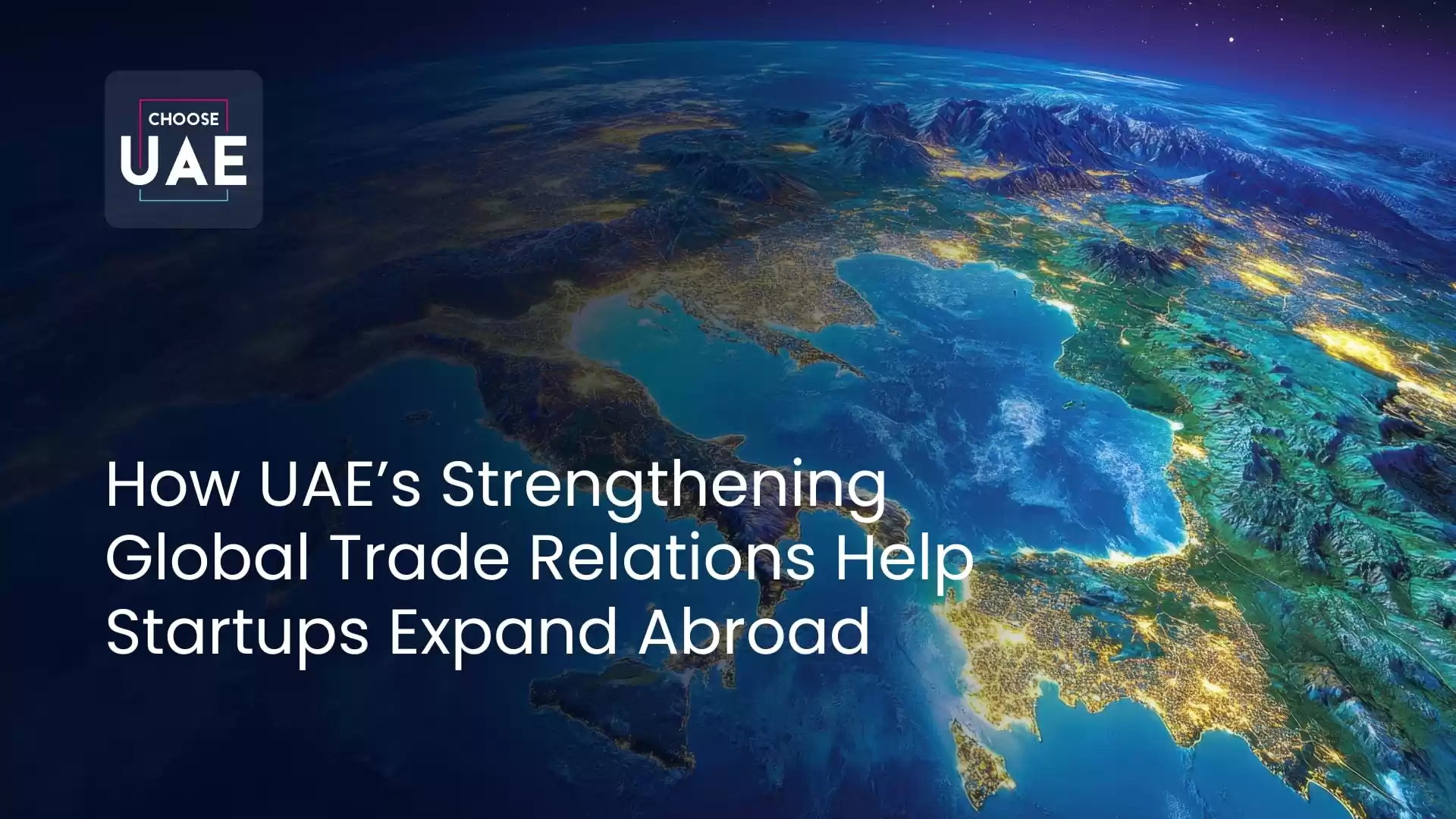
The UAE has been building stronger global trade ties through new agreements, updated policies, and strategic partnerships. These developments are not just headlines. They actively shape how startups grow, compete, and enter new markets. While these opportunities are promising, early stage founders must understand both the benefits and practical limits before expanding abroad.
The UAE’s position as a logistics and commercial hub is not accidental. Ongoing Comprehensive Economic Partnership Agreements with markets in Asia, Europe, and Africa reduce barriers on goods, services, and capital flow. Startups benefit from easier access to suppliers, cross border customers, and partnerships, but only if they have the capacity and compliance to leverage these opportunities. These agreements simplify trade, yet they do not replace market research or operational readiness.
The UAE’s trade agreements often lower tariffs and simplify documentation. This can reduce export costs and shorten time to market. For product based startups, this helps them test foreign markets without massive upfront spending. Service based startups benefit from friendlier cross border licensing rules in select partner countries. Still, reduced barriers do not guarantee demand. Startups must validate if the target market is willing to adopt their product or service.
The UAE continues to invest in ports, digital customs, and integrated logistics solutions. For e commerce founders and manufacturers, this improves shipping predictability and customer experience. However, stronger trade infrastructure does not fix internal bottlenecks like limited stock, weak cash flow management, or lack of export ready packaging. Startups need to ensure their internal systems can meet international standards before scaling.
With the UAE positioned as a gateway economy, global investors and corporations increasingly scout UAE based startups for collaboration. Trade agreements support this by offering clearer frameworks for cross border cooperation. Yet investor interest does not automatically mean funding. Startups must show compliance, clear financials, and scalable models. The expanding trade network simply opens doors. Founders still need strong fundamentals to walk through them.
To make the most of the UAE’s global trade relationships, startups must prepare deliberately. Key steps include:
Build a compliant UAE structure that can support cross border activity
Strengthen financial reporting, tax compliance, and documentation
Understand specific trade rules in target markets
Assess logistics costs, delivery timelines, and refund policies
Study cultural and consumer behavior differences
Protect intellectual property in each new jurisdiction
These steps require time and planning. Expanding prematurely can drain resources.
Choose UAE supports founders by simplifying their company setup, compliance, and expansion planning. From selecting the right business license to assisting with banking, visas, documentation, and market support, we help startups operate with confidence. Our guidance ensures your structure, paperwork, and timelines align with the requirements of international partners and potential investors. Ready to build your foundation for global expansion? Contact us and our team will guide you step by step.