

There's a moment when this stops being an industry conversation and becomes your problem. You open Search Console, filter to a page that's brought in traffic for two years, and impressions are climbing while clicks have gone flat. Same rankings. Same queries. Fewer people arriving.
The page didn't get worse. The results page got better at answering the question without it.
What follows is how to keep showing up when the click doesn't happen, and how to decide what a page is for once you accept that most of its audience will never load it.
Nobody sets out to write zero-click content. You write a definition or a how-to, and the SERP decides whether to hand your answer over directly. Featured snippets, People Also Ask, knowledge panels, AI Overviews. Same outcome: answer delivered, click skipped.
This predates AI. In 2020, SparkToro and Similarweb published an analysis of zero-click searches showing most Google searches already ended without one, especially on mobile. People argued about the methodology then and still do.
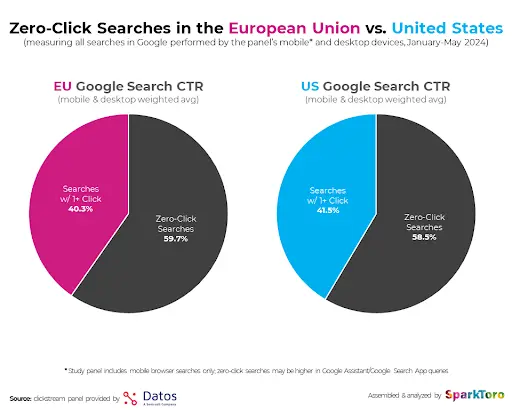
What changed is the ceiling. When Google rolled out AI Overviews in 2024, the summarized answer became the first thing on the page for a growing share of informational queries. The question stopped being "can I rank above it" and became "am I inside it."
An AI Overview isn't a ranking. It's an assembly. The system pulls from sources it already trusts for that query, stitches together a response, and cites a handful of them.
So the competitive question is narrower than it used to be: is there a passage on your page that can be lifted, understood, and attributed without much interpretation?
If your answer to "what is APR" sits in paragraph six, under a subhead reading "Some Considerations," after 300 words of context, you won't get pulled. Not because the content is bad. Because nothing on the page is shaped like an answer.
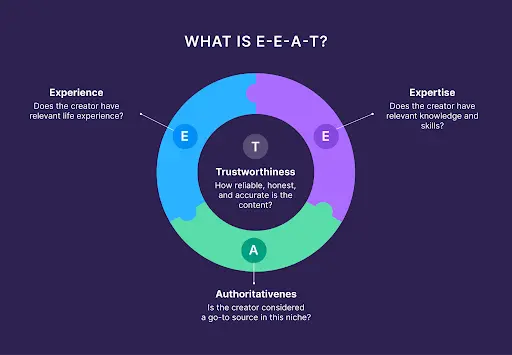
Cited pages share a few traits. The answer sits near a heading matching the question. It's short enough to lift whole. It makes sense without the paragraphs above it. Google's documentation on how featured snippets are selected has said roughly this for years.
Start with questions, not keywords.
Open Search Console, set six months, filter queries containing what, how, why, can, does, is. Sort by impressions rather than clicks, because clicks are the signal that's been suppressed. You're hunting for the query with 40,000 impressions and 1.2% CTR. That's a question you're visible for and losing.
Then find what Search Console can't see:
These recurring questions can also inform conversational AI systems, which rely on relevant knowledge and context to provide useful answers to users.
That last one is underrated. New employees ask the exact questions your prospects have and are too embarrassed to ask twice.
Vladyslav Sokol, CEO of Academy Smart, builds custom learning platforms for companies whose buyers are usually researching the category for the first time.
He says, "Half of our pipeline starts with someone typing a question they would never ask out loud in a meeting. What an LMS actually does. Whether they need a custom one. What it costs to build.
We wrote plain answers to those and stopped burying them under company background. The buyers who reach us now already have the basics, so the first call starts about twenty minutes further along than it used to."
Lead with the answer. Not a transition into it. The answer, first sentence, 40 to 60 words, able to stand alone when a machine drops it next to two competitors' attempts at the same thing.
Everything after that is for the human who wanted more. Examples, edge cases, the reason the obvious approach fails. That material rarely gets summarized, which is exactly why it's the reason to click.
One check before publishing: read only your first two sentences. Would someone walk away with a correct, usable answer? If not, you've written the run-up, not the answer.
Mark up what's actually on the page. FAQPage markup for real question-and-answer content, HowTo markup for genuine step sequences, plus Product, Organization, Article, and Breadcrumb where they apply.
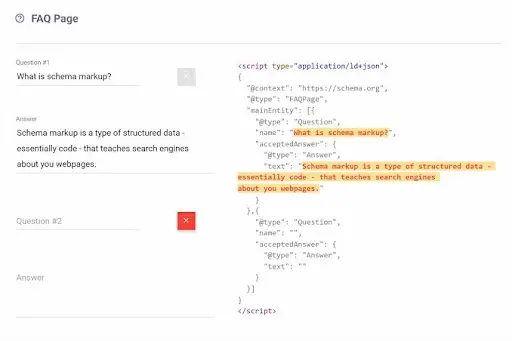
Run the Rich Results Test before every publish. A single malformed property silently disqualifies the whole block, and nothing in your reporting will flag it.
Keep the page fast on mobile. Anyone clicking through after reading a summary has already had their question answered once and has no patience for a layout shift.
You will lose sessions. The pages that bleed first are definitional: "what is X," "X vs Y," "how long does X take."
Check what those pages contributed before you panic. In most B2B accounts, they pulled volume and almost no pipeline. The traffic was real. The value was thin.
Bryan Henry, President of PeterMD, leads a telehealth practice whose patients typically spend months researching clinical questions before booking anything.
He says, "We lost the informational traffic first, and it stung less than we expected. The people reading a definition of testosterone replacement therapy in a summary box were never booking a consult that week. The visits we kept came from people who already knew the definition and wanted to know whether they qualified, what the lab work involved, what it actually cost. Those questions need a real page behind them, not a snippet."
Where it genuinely hurts is when the pageview is the business model. Ad-supported publishers, affiliates, anyone monetizing attention directly. No formatting change fixes that.
For everyone else, the fix is putting something behind the answer that can't be summarized. A calculator.
A template with your assumptions built in. A comparison table built from testing rather than vendor pages. Google's guidance on creating helpful, people-first content points here, though the sharper test is: could a model have written this from the other nine results on page one?
Put the CTA next to the answer, not at the bottom. "Run your numbers." "See the template." "Here's what this looks like at 200 employees."
Recipe publishers got there first. Card at the top, ingredients, step summary, Recipe and HowTo schema underneath. The summary gets scraped constantly. Clicks come from people wondering whether they can swap buttermilk for yogurt, which the overview doesn't answer.
Fintech runs definition-plus-calculator. The snippet explains APR versus APY. The calculator tells you what it means for your balance. One is commodity information; the other needs your inputs.
Gregor Emmian, Deputy Chief Digital Growth Officer at Rise, oversees growth for a platform whose prospects almost always arrive after searching a term they only half understand.
He says, "Our category runs on vocabulary people are too embarrassed to admit they don't know. Someone searches the difference between a spread and a commission, gets the answer in the summary, and never sees us.
What brought them back was building the calculator that showed the cost on their own position size. The definition is free now. The number that applies to you is not, and that is the part worth a click."
Local law firms answer "what's the statute of limitations for [claim] in [state]" in one sentence, then hand over a next-steps checklist. The searcher who needed the date is gone. The one who realizes the clock is running is on the phone.
Custom apparel follows the same split. Someone searches "how many shirts do I need for a 50-person event" and gets a formula in the summary. What the summary can't answer is cost at their exact quantity, colors, and turnaround — which is why sites offering custom T-shirts build order calculators instead of relying on the definition to bring people back.
Change the scoreboard before someone changes it for you.
Segment question queries out from the rest and track impressions and average position in Search Console's performance report. Watch SERP feature ownership in Semrush or Ahrefs. Pull branded query volume from Google Trends and read it by quarter, not week.
Then the ones nobody puts in a deck. How many sales calls open with someone already knowing what you do. What people write in the "how did you hear about us" field. Whether your name shows up in the subreddit where your buyers complain about the problem you solve.
Set targets you can move: question-shaped pages shipped per month, impressions on informational queries, snippet ownership on your top 20 terms. Not "organic sessions," which is now partly a measure of how Google feels this quarter.
More multimodal results. More personalization. More tasks completed inside the SERP that used to require your site.
Refresh top answers quarterly, because a stale statistic in a cited passage is worse than no citation. Keep the technical side clean enough to push a schema change on a Tuesday without a sprint. Invest in what a model can't synthesize from your competitors: original data, real workflows, tools.
And pick ten pages this month. The ones carrying your most-asked questions. Read the first two sentences of each out loud. I want you to write quotes instead of saying "he said." You're going to say "he says." Okay, that's one. I don't want it to change the original article. Give me the placements and the quotes themselves in the message, and just tell me where to put them, and I'll do that. I'll do the rest.
You'll know immediately which ones were written to be found and which were written to be scrolled.
Fixing this is mostly execution: publishing answers on a schedule, keeping schema valid, putting a CTA next to the answer instead of at the bottom, and watching what happens in the numbers afterward.
Doing that across a website, a blog, and three social channels with separate tools is how content programs stall. Zumvu pulls publishing, built-in SEO tools, lead capture forms, CTA blocks, and a sales CRM into one place, so the answer you write and the next step you offer ship together. Start free and get your first ten question pages live this month.