

In most online stores, product images decide whether a user clicks or scrolls past. Even when price and description are similar, clearer and more attractive photos usually win the click.
In this article, we share a practical case study. We show how we refreshed product images with AI upscaling instead of doing a new photo shoot, and how this affected CTR in our ad campaigns. This story will be useful for e-commerce teams, marketers, and content managers who work with product visuals but have limited time and budget for reshooting.
We will cover our starting point, the approach we used, the AI tool that helped us, and the results we saw in numbers.

Before changing anything, we reviewed the visual content in the online store. Some product photos had relatively low resolution and looked average on modern screens. When we enlarged them, they quickly lost sharpness. Details faded, and digital artifacts became visible.
Ad CTR for these products stayed below the account average. From time to time, we also saw comments that product photos were “not very clear” or looked “blurry” on the website. This was a clear sign that images had become a weak point in how users perceived the brand.
We did not update the entire catalog at once. Instead, we focused on one category with stable traffic and predictable seasonality. Within this category, we selected products with average CTR, not just the worst performers. This made it easier to see real changes without extreme outliers.
For image enhancement, we used the online tool AI Image Enlarger from ImageUpscaler. It increases image resolution and restores details using AI models, while keeping a natural, realistic look.
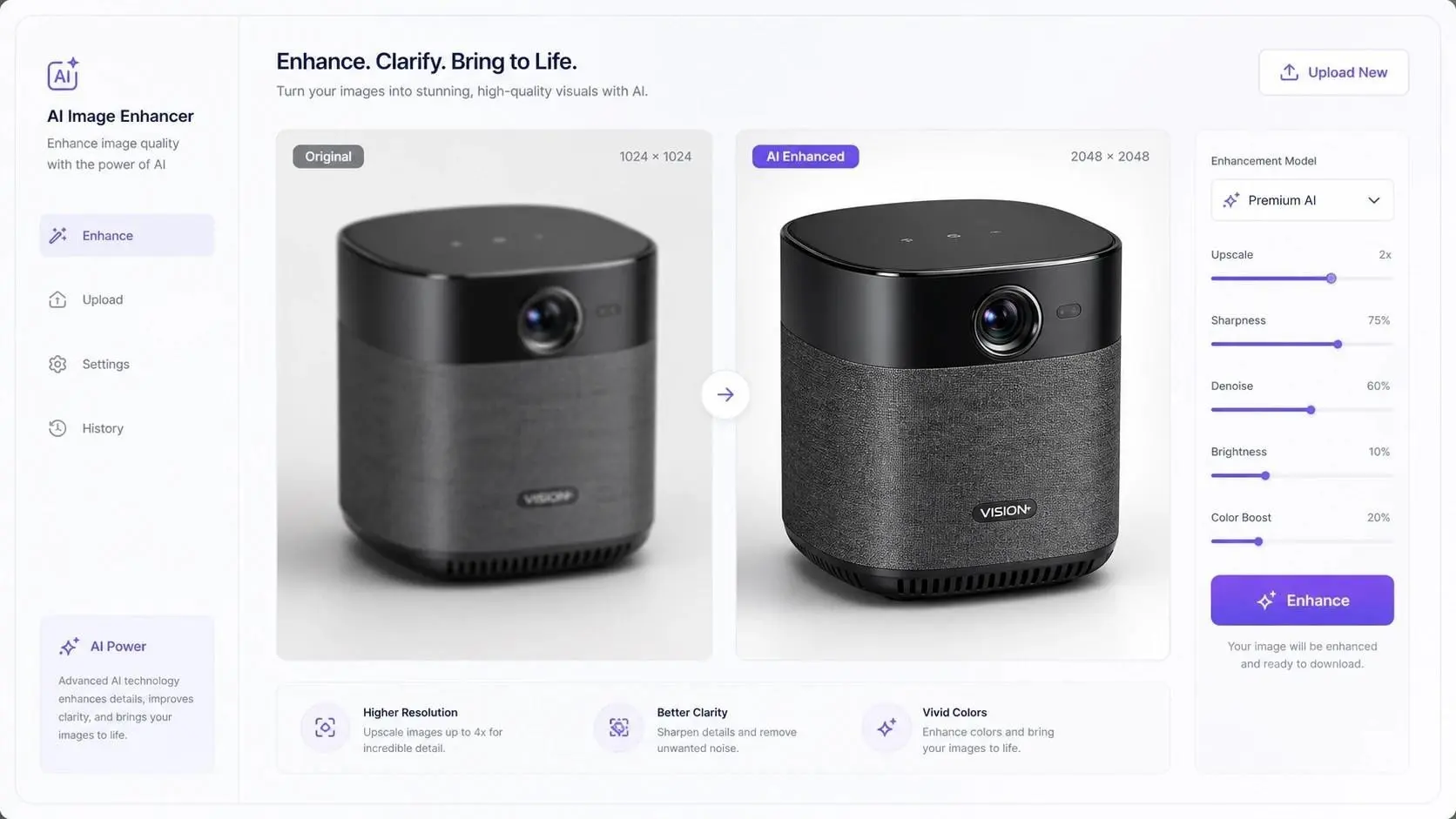
Our process was simple:
After processing, the images looked much more expressive. Material textures appeared richer and more three-dimensional. Product edges became clean and precise, without jagged lines or obvious artifacts.
To document the difference, we compared basic parameters before and after AI upscaling.
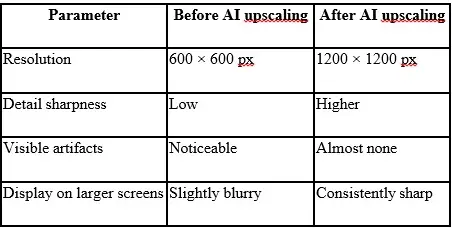
In practice, this meant that the same product photos started to look confident and professional in ad placements, product listings, and on product pages.
To understand whether better images actually helped, we ran an A/B test. In variant A, we used the original product photos. In variant B, we used the same products, the same ad copy, and the same targeting, but replaced images with the AI-enhanced versions. Both variants ran in parallel for several weeks. This gave us enough data to smooth out random fluctuations and see a clear trend.
We focused on three key metrics:
For the test group, the results looked like this:
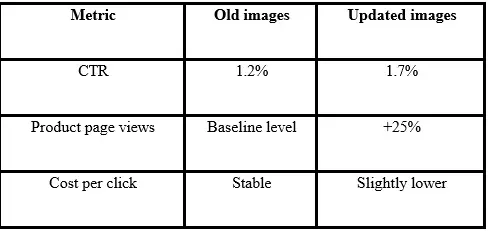
Ads with updated photos attracted more attention. Users clicked on them more often in the feed, which directly increased CTR and traffic to product pages.
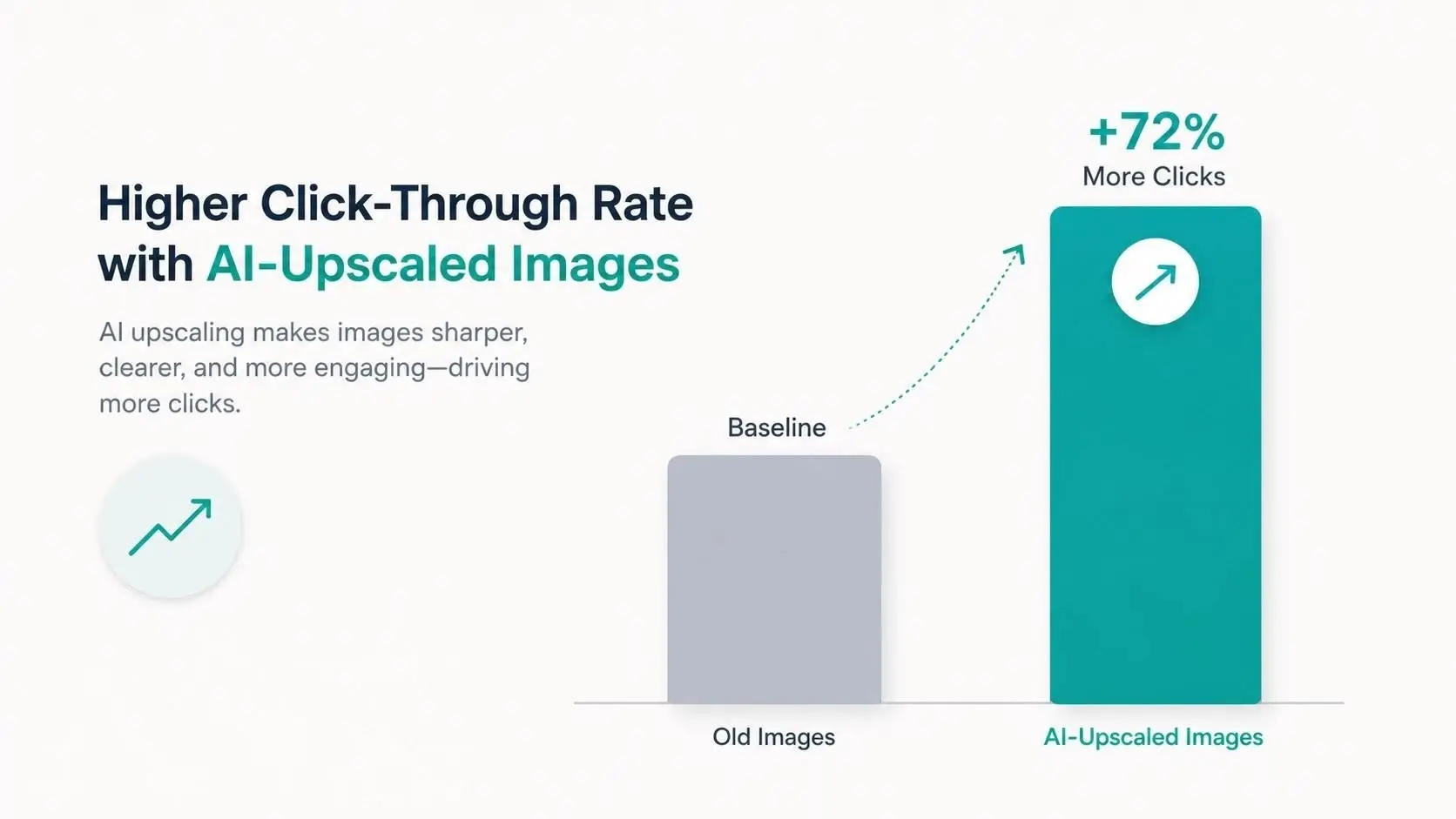
Along with higher CTR, we noticed several other positive effects. Visitors spent more time viewing image galleries and were more likely to swipe through all photos. Comments about “low image quality” became less frequent.
The catalog also started to look more consistent and professional. Even products from different batches felt more unified visually thanks to the higher and more even image quality. This helped improve the overall impression for new visitors who were seeing the brand for the first time.
Our experience shows that image quality is not only about “nice design.” It is a performance lever that directly influences CTR, engagement, and conversions in e-commerce. AI solutions like AI Image Enlarger from ImageUpscaler let you upgrade your product visuals without a full reshoot. They work best when combined with a structured process: select a test group, run A/B tests, analyze the metrics, and then scale the approach to the rest of the catalog. This strategy can work for many verticals: fashion, accessories, electronics, home goods, and more. The key is to treat images as a core part of marketing performance, not just as decoration.