UPVC stands for Unplasticized Polyvinyl Chloride, a rigid PVC material commonly used in piping systems for water supply, irrigation, borewells, plumbing and drainage. Unlike flexible PVC formulations, UPVC is not made flexible by adding plasticizers, which helps it retain a rigid structure suitable for many pipe applications.
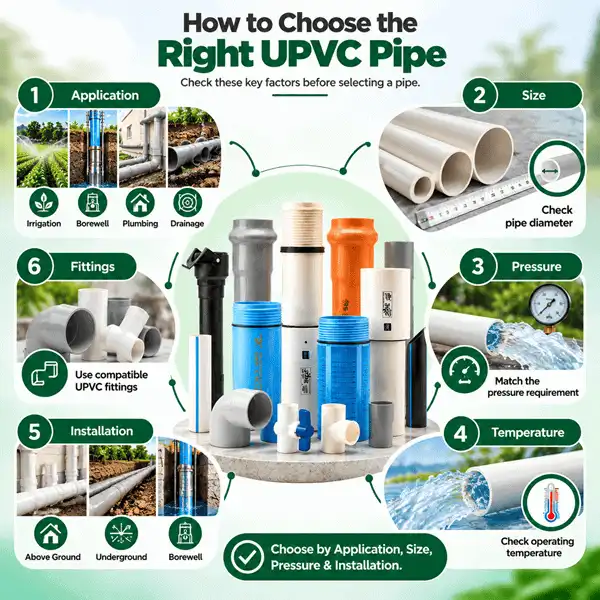
UPVC pipes are available in different types depending on their purpose. Pressure pipes are used for pressurized water and irrigation, casing pipes are used in borewell systems, column pipes work with submersible pumps, while SWR and underground drainage pipes are designed for soil, waste, rainwater and drainage applications.
The right UPVC pipe should be selected according to the application, required diameter, pressure class, operating temperature, installation conditions and compatible fittings. Pipes from the same UPVC material family should not be treated as interchangeable because each product system is designed for a specific use.
This guide explains the UPVC full form, material, types, benefits and applications to help users understand how UPVC pipes are used and what factors matter when choosing the right pipe for a project.



 Australia
 Singapore
 United Kingdom
 United States
 Germany
 South Africa
 New Zealand
 Nigeria
 Canada
 France
 Spain
 Italy
 Ireland
 UAE